

Common Pitfalls in Polyamory Couples Therapy and How to Navigate Them
Research indicates that approximately 4 to 5 percent of the U.S. population currently identifies as non-monogamous, a demographic that has seen significant growth in visibility and community support over the last decade according to recent demographic studies. Despite this rising visibility, many individuals entering polyamorous relationships encounter unexpected psychological hurdles that traditional relationship counseling often fails to address. Navigating these complexities requires more than just communication skills; it demands a specialized understanding of attachment styles, boundary negotiation, and emotional regulation within non-traditional structures. This guide explores the most frequent pitfalls in polyamory couples therapy and provides actionable strategies for overcoming them. (Graham Gallivan LMFT Bay)
Understanding Polyamory Frameworks
Before addressing specific pitfalls, it is essential to define the structural context of polyamory. Polyamory is the practice of engaging in multiple romantic relationships with the consent of all people involved. This definition distinguishes it from cheating or infidelity, which lack transparency and agreement. Within this framework, relationships can take various forms, including hierarchical structures where primary partners hold precedence, or non-hierarchical models where all connections are valued equally. Understanding these frameworks is critical because many therapeutic pitfalls arise from a mismatch between a couple's stated values and their actual relational structure.
For individuals in the San Francisco Bay Area, the cultural emphasis on personal autonomy and progressive relationship models often creates a supportive environment for polyamory. However, this same environment can create pressure to perform emotional labor perfectly. Graham Gallivan, a Licensed Marriage and Family Therapist, specializes in helping couples navigate these unique challenges with an LGBTQ+-affirming and holistic approach. His practice integrates evidence-based techniques with a deep respect for the diverse ways people construct intimacy.
Pitfall 1: Mismanaging Jealousy and Compersion
One of the most common reasons couples seek therapy in polyamorous dynamics is the experience of jealousy. Many individuals mistakenly believe that jealousy is a sign of failure or a lack of trust. In reality, jealousy is often a signal of unmet needs or insecurities that require exploration. The goal of therapy is not to eliminate jealousy entirely but to develop the tools to process it constructively.
Another concept often misunderstood is compersion, which is the feeling of joy one experiences when seeing their partner find happiness with another person. While compersion is celebrated in polyamorous communities, it is not a mandatory emotional state. Pressuring oneself or a partner to feel compersion can lead to emotional suppression and resentment. Effective therapy helps clients distinguish between their own emotional responses and the societal narratives they have internalized about what love "should" look like.
The Role of Emotional Regulation
High-achieving professionals, particularly those in the tech industry prevalent in San Francisco, often approach emotional regulation with the same analytical mindset they apply to their careers. This can lead to a pitfall where emotions are treated as problems to be solved rather than experiences to be felt. Therapists like Graham Gallivan help clients slow down this process, allowing them to sit with discomfort without immediately trying to fix it. This pause is crucial for developing genuine emotional resilience.
Pitfall 2: Boundary Erosion and Consent Fatigue
Consent is the cornerstone of ethical non-monogamy. However, a frequent pitfall is "consent fatigue," where the constant need to negotiate, check in, and re-negotiate boundaries becomes exhausting. Over time, couples may find themselves making decisions based on convenience or avoidance of conflict rather than genuine desire and safety. This erosion of boundaries can lead to a breakdown in trust and a sense of disconnection from one's own needs.
Boundaries in polyamory are not just about physical or sexual exclusivity; they extend to time, emotional energy, and information sharing. For example, a couple might agree that one partner can date others but must provide a 24-hour notice before a first date. If this boundary is repeatedly bent or ignored, it signals a deeper issue in the relationship's power dynamics. Therapy provides a neutral space to revisit these agreements and ensure they still serve both partners' well-being.
Revisiting Agreements Regularly
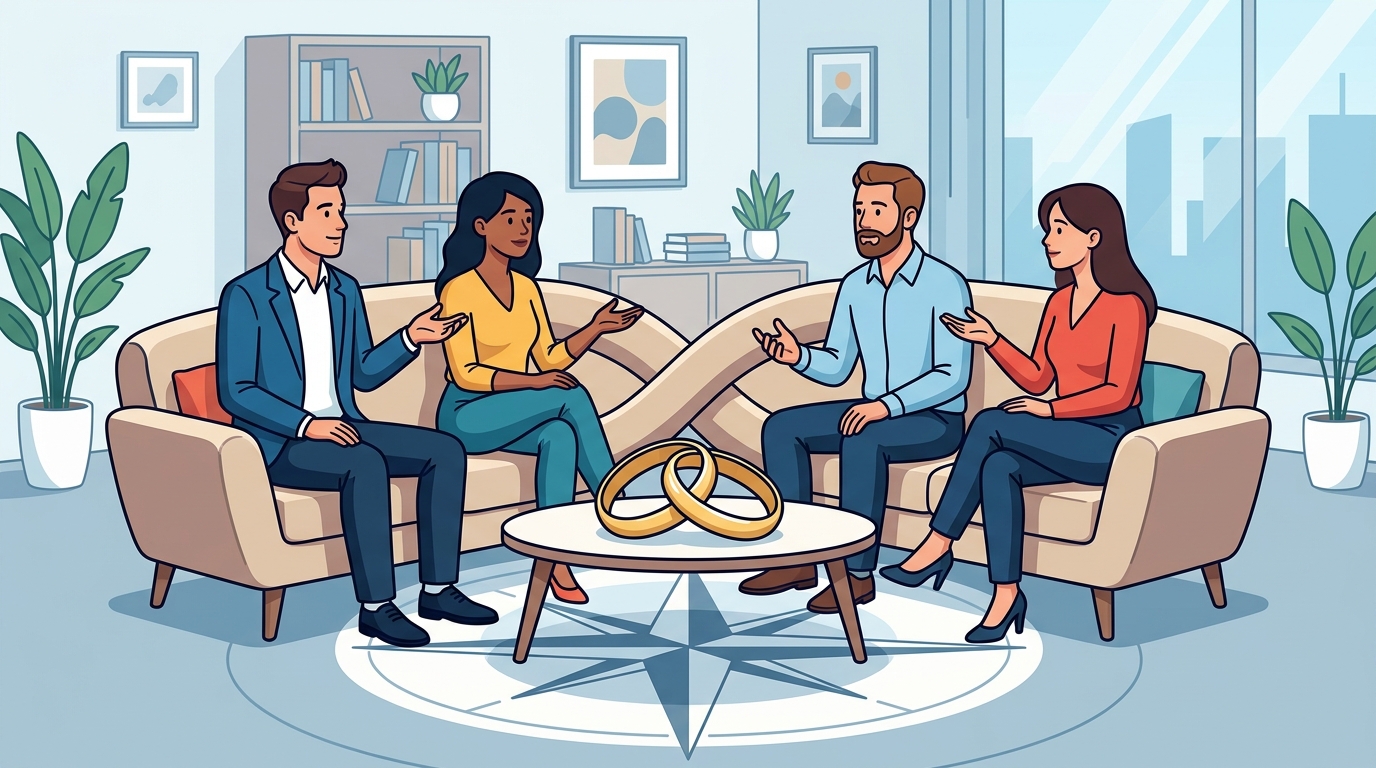
Relationship agreements are not static contracts. They should evolve as individuals grow and circumstances change. Regular check-ins, facilitated by a therapist if necessary, help couples stay aligned. These sessions allow partners to express what is working and what is not, preventing small grievances from accumulating into major crises.
Pitfall 3: Communication Gaps in Complex Dynamics
Communication in polyamorous relationships is inherently more complex than in monogamous ones. Partners must navigate not only their own relationship but also the dynamics with metamours (their partner's other partners). A common pitfall is the assumption that all partners share the same communication style or expectations. What feels like a casual update to one person might feel like a significant disclosure to another.
Another communication gap arises from the "meta-communication" problem, where partners talk about how they talk but fail to address the underlying emotional content. For instance, a couple might spend hours discussing the logistics of scheduling dates without addressing the fear of abandonment that drives the need for constant contact. Effective therapy helps couples move beyond logistical coordination to address the emotional undercurrents of their interactions.
Structured Check-Ins
Implementing structured check-ins can help mitigate communication gaps. These are dedicated times for partners to discuss their emotional states, relationship satisfaction, and any emerging concerns. Using a therapist-guided framework for these check-ins ensures that both partners have equal opportunity to speak and be heard.
Pitfall 4: Choosing the Wrong Therapeutic Approach
Not all therapists are equipped to handle the nuances of polyamorous relationships. A common pitfall is seeking help from a professional who holds mononormative biases, either consciously or unconsciously. This can lead to therapy sessions that inadvertently pathologize the relationship structure rather than addressing the individual or relational issues. Clients may find themselves having to educate their therapist about the basics of polyamory, which can be exhausting and counterproductive.
It is crucial to find a therapist who is LGBTQ+-affirming and experienced with consensual non-monogamy. Graham Gallivan, for example, specializes in working with LGBTQ+ folx and couples, bringing a deep understanding of the unique challenges faced by these communities. His approach is grounded in evidence-based techniques while remaining flexible enough to honor the diversity of relationship structures.
Signs of a Qualified Therapist
Look for therapists who explicitly mention experience with non-monogamy, polyamory, or open relationships on their profiles. During an initial consultation, ask direct questions about their training and experience with these dynamics. A qualified therapist will be comfortable discussing these topics without judgment and will offer insights tailored to your specific situation.
Comparison of Therapy Models for Polyamory
Different therapeutic models offer varying benefits for polyamorous couples. Understanding these differences can help you choose the right approach for your needs.
| Therapy Model | Focus | Best For | Limitations |
|---|---|---|---|
| Emotionally Focused Therapy (EFT) | Attachment bonds and emotional safety | Couples struggling with trust and intimacy | May require adaptation for non-hierarchical structures |
| Imago Relationship Therapy | Healing childhood wounds through partnership | Couples seeking deep personal growth | Can be rigid in its structured dialogue |
| Nonviolent Communication (NVC) | Empathetic listening and clear expression | Improving day-to-day communication | Less focus on deep emotional processing |
| Holistic/Spiritual Counseling | Integration of mind, body, and spirit | Those seeking meaning and purpose in relationships | May not address clinical psychological issues |
Each model has its strengths, and many therapists integrate elements from multiple approaches. The key is to find a practitioner who can tailor their methods to your unique relationship dynamics. For instance, Graham Gallivan’s practice combines evidence-based techniques with a holistic view of life domains, including spirituality and work, to provide comprehensive support.
Key Takeaways
- Jealousy is a signal, not a failure: It often points to unmet needs or insecurities that can be explored in therapy.
- Boundaries require maintenance: Regularly revisiting and adjusting agreements prevents erosion and resentment.
- Communication is multi-layered: Address both logistical and emotional aspects of your interactions.
- Therapist fit is critical: Seek professionals with specific experience in consensual non-monogamy and LGBTQ+ affirming care.
- Consent is ongoing: It is not a one-time agreement but a continuous process of negotiation and check-ins.
- Holistic support matters: Integrating spirituality, work-life balance, and personal growth enhances relational health.
- Community support is valuable: Connecting with other polyamorous individuals can provide validation and shared learning.
Frequently Asked Questions
Is polyamory therapy different from traditional couples counseling?
Yes, polyamory therapy often requires a deeper understanding of complex relationship structures, metamour dynamics, and societal biases. Therapists must be adept at navigating non-normative relationship models without imposing mononormative values.
How do I find a therapist who understands polyamory?
Look for therapists who explicitly state experience with consensual non-monogamy or LGBTQ+ affirming care. You can also ask for referrals from local LGBTQ+ community centers or polyamorous support groups.
Can therapy help if only one partner wants to be polyamorous?
Therapy can help explore the underlying reasons for each partner's desires and fears. It can facilitate honest communication and help determine if the relationship can continue in a way that satisfies both partners, or if it is time to part ways.
What is the role of compersion in therapy?
Therapy helps clients understand that compersion is not a requirement for a healthy relationship. It focuses on developing self-awareness and emotional regulation so that partners can support each other's happiness without feeling threatened.
How often should polyamorous couples attend therapy?
The frequency depends on the couple's needs. Some may benefit from weekly sessions during periods of transition or conflict, while others may prefer monthly check-ins to maintain relationship health.
Does Graham Gallivan offer online therapy for polyamory?
Yes, Graham Gallivan offers online therapy available throughout California and South Carolina, providing accessible support for individuals and couples regardless of their location.
What are the costs associated with polyamory therapy?
Fees vary by therapist and location. Graham Gallivan provides a Good Faith Estimate for services, ensuring transparency in pricing. It is advisable to check with your insurance provider to see if any sessions are covered.
Schedule Your Consultation
Navigating the complexities of polyamory requires patience, self-awareness, and professional support. If you are struggling with jealousy, boundary issues, or communication gaps, reaching out for help is a courageous step toward healing. Graham Gallivan offers a free 15-minute phone or video consultation to discuss your needs and determine if his practice is the right fit for you. Take the first step toward a more authentic and fulfilling relationship journey by scheduling your consultation today.