

San Francisco therapists utilize a variety of evidence-based frameworks to help partners rebuild trust and intimacy. Graham Gallivan Psychotherapy integrates these methods to support couples navigating complex relationship dynamics in the Bay Area. Understanding these approaches helps you find a therapist whose style aligns with your specific needs.
1. Emotionally Focused Therapy (EFT)
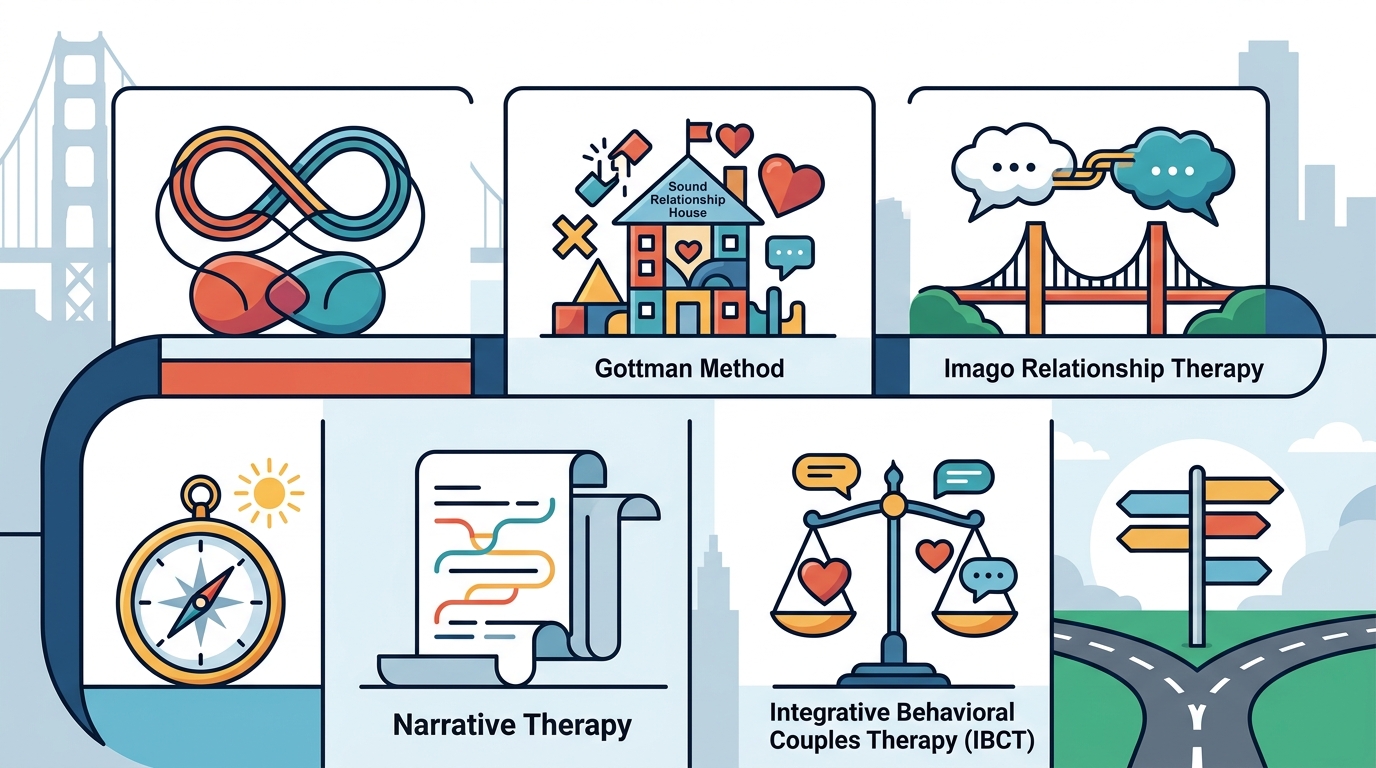
EFT targets the underlying emotional patterns that drive conflict and disconnection. This approach helps partners identify negative cycles of interaction that keep them stuck. By accessing deeper emotional needs, couples can create new, positive bonding experiences. It is particularly effective for couples who feel emotionally distant or stuck in repetitive arguments.
2. Gottman Method
The Gottman Method relies on extensive research to predict relationship success and failure. Therapists using this model focus on specific communication skills and conflict management strategies. They help partners understand their unique "love maps" and build shared meaning. This data-driven approach is popular among couples who want practical tools to improve daily interactions.
3. Imago Relationship Therapy
Imago Therapy helps partners understand how their childhood experiences shape their adult relationships. This approach views conflict as an opportunity to meet unmet childhood needs. Partners learn to communicate their "imago" or ideal partner image to each other. It is useful for couples who feel their partner is not meeting their core emotional expectations.
4. Integrative Behavioral Couple Therapy (IBCT)
IBCT combines cognitive-behavioral techniques with acceptance and compassion strategies. Instead of trying to change a partner's personality, this approach helps couples accept each other's differences. It reduces the frustration that comes from trying to fix a partner. This method is ideal for couples who have tried other therapies without success.
5. Narrative Therapy
Narrative Therapy helps couples rewrite the story of their relationship. Therapists help partners identify the dominant narratives that define their relationship, often negative ones. By externalizing problems, couples can separate themselves from the issues they face. This approach empowers partners to create a new, preferred story for their relationship.
6. Psychodynamic Couples Therapy
Psychodynamic therapy explores the unconscious patterns and past traumas that affect current relationships. This approach looks at how early attachment styles influence adult intimacy. It helps partners understand the deeper roots of their emotional reactions. It is beneficial for couples dealing with deep-seated trust issues or past relationship trauma.
7. LGBTQ+ Affirming Therapy
LGBTQ+ affirming therapy addresses the unique challenges faced by queer and trans couples. This approach recognizes the impact of societal stigma and minority stress on relationships. Therapists help partners navigate issues like coming out, family rejection, and non-traditional relationship structures. Graham Gallivan Psychotherapy specializes in this area, providing a safe space for LGBTQ+ couples in San Francisco and virtually across California and South Carolina.
Choosing the Right Approach
Selecting the right therapy depends on your specific relationship challenges and personal preferences. If you prefer practical tools, the Gottman Method or IBCT may be best. If you want to explore deeper emotional roots, EFT or Psychodynamic therapy might be more suitable. For LGBTQ+ couples, finding a therapist with specific affirming experience is crucial. Consider scheduling a consultation to discuss which approach aligns with your goals.
Frequently Asked Questions
What is the most effective couples therapy approach?
There is no single "best" approach for every couple. Effectiveness depends on the specific issues you are facing and your personal preferences. Emotionally Focused Therapy and the Gottman Method have strong research support, but the right fit is often more important than the specific model.
How long does couples therapy typically take?
The duration varies widely based on the complexity of the issues. Some couples see significant improvement in 6 to 12 sessions, while others may need longer-term support. Consistency and commitment from both partners are key factors in the timeline.
Can couples therapy help with infidelity?
Yes, many therapists specialize in helping couples navigate the aftermath of infidelity. Approaches like EFT and Narrative Therapy can help partners process the trauma and rebuild trust. It requires a high level of commitment and willingness to do difficult emotional work.
Is virtual couples therapy as effective as in-person?
Research suggests that virtual therapy can be just as effective as in-person sessions for many couples. It offers flexibility and convenience, which can be beneficial for busy professionals in the Bay Area. Graham Gallivan Psychotherapy offers virtual sessions for clients in California and South Carolina.
Do both partners need to attend sessions?
Traditionally, both partners attend sessions. However, some therapists offer individual sessions for one partner to help them understand their role in the relationship dynamics. This can be a starting point if one partner is hesitant to participate in joint therapy.
How do I know if my therapist is a good fit?
Trust and comfort are essential. You should feel heard and understood by your therapist. If you feel judged or disconnected, it may be worth seeking a different provider. A good therapist will create a safe, non-judgmental space for both partners.