

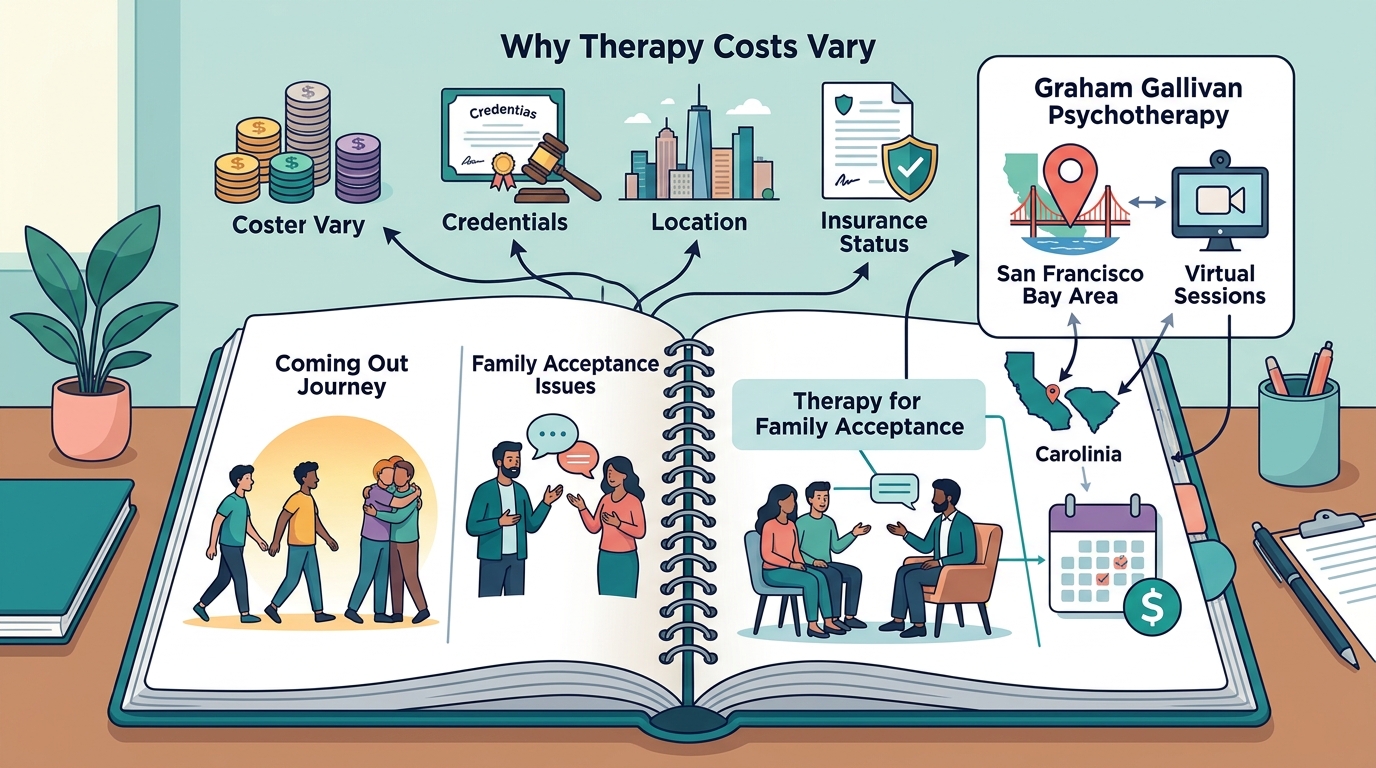
Therapy for family acceptance issues costs more or less depending on the therapist's credentials, location, and insurance status. In the San Francisco Bay Area, specialized providers like Graham Gallivan Psychotherapy offer in-person and virtual sessions that reflect these market dynamics. Understanding these drivers helps you budget effectively while finding the right support for your coming out journey.
Specialization and Lived Experience Impact Pricing
Therapists who specialize in LGBTQ+ identity and family systems often command higher fees due to their specialized training. Family acceptance therapy is a specialized modality that addresses the complex dynamics of rejection, boundary setting, and identity integration. When a therapist has lived experience as a member of the LGBTQ+ community, they bring a unique depth of understanding that can accelerate the healing process. This combination of professional expertise and personal insight is a significant value driver in the Bay Area market.
Geographic Location and Market Rates
Location is one of the most significant factors in therapy pricing. The San Francisco Bay Area has some of the highest cost of living and real estate costs in the United States, which directly impacts office rent and operational expenses. Anxiety therapy and other specialized services in this region typically reflect these higher overhead costs. In contrast, therapists in rural areas or those operating entirely online from lower-cost regions may offer lower session fees.
Insurance Status and Out-of-Network Considerations
Whether a therapist is in-network or out-of-network with your insurance provider significantly affects your out-of-pocket costs. Many specialized LGBTQ+ therapists operate as out-of-network providers, meaning you pay the full fee upfront and may seek reimbursement from your insurance company. Graham Gallivan Psychotherapy operates as an out-of-network provider, offering a superbill for insurance reimbursement. This model allows therapists to maintain higher fees that reflect their specialized training while giving clients the flexibility to use their insurance benefits.
Out-of-network therapy often comes with a higher upfront cost, but it can also provide greater flexibility in choosing a provider who truly understands your specific needs. In-network providers may have lower fees, but their availability of specialized LGBTQ+ affirming care can be limited. Clients should weigh the cost difference against the potential benefits of working with a highly specialized out-of-network therapist who can offer a more tailored approach to family acceptance issues.
Session Format and Virtual Care Options
The format of your sessions, whether in-person or virtual, can also influence the cost of therapy. Virtual therapy has become increasingly popular, especially for clients who value flexibility or live outside the immediate service area. Graham Gallivan Psychotherapy offers virtual sessions throughout California and South Carolina, allowing clients to access specialized care from the comfort of their homes. Virtual sessions may sometimes be priced slightly lower than in-person sessions due to reduced overhead costs, though this varies by provider.
For clients dealing with family acceptance issues, virtual therapy offers a safe and private space to process difficult emotions without the stress of commuting to a physical office. This format can be particularly beneficial for those who are still navigating their identity and may not feel comfortable meeting a therapist in a public setting. The convenience of virtual care can make specialized therapy more accessible, especially for those in areas with fewer local providers.
Therapist Experience and Training Level
The level of experience and training a therapist has also plays a role in determining their fees. Licensed Marriage and Family Therapists (LMFTs) with extensive experience in working with LGBTQ+ clients and family systems typically charge higher rates than those with less specialized training. Graham Gallivan, an LMFT, brings a combination of professional training and personal experience to his practice, which is reflected in his fee structure. This level of expertise ensures that clients receive evidence-based care that is deeply informed by an understanding of the unique challenges faced by LGBTQ+ individuals.
Investing in a therapist with extensive experience can lead to more effective and efficient treatment, potentially reducing the total number of sessions needed. While the per-session cost may be higher, the overall cost of care may be lower if the therapist can help you achieve your goals more quickly. Clients should consider the total cost of care, including the number of sessions likely needed, when evaluating the value of different therapists.
Key Takeaways
- Specialization in LGBTQ+ identity and family systems is a major driver of therapy costs.
- Geographic location, particularly in high-cost areas like the Bay Area, significantly impacts fees.
- Out-of-network therapists often charge higher fees but offer greater flexibility in provider choice.
- Virtual therapy can provide a cost-effective and convenient option for accessing specialized care.
- Therapist experience and training level influence both the cost and the effectiveness of treatment.
- Understanding these factors helps you make informed decisions about your mental health care.
Frequently Asked Questions
Why is specialized LGBTQ+ therapy more expensive?
Specialized therapy often costs more due to the therapist's advanced training, lived experience, and the high demand for affirming care in specialized markets.
Does insurance cover family acceptance therapy?
Coverage depends on your specific plan and whether the therapist is in-network. Out-of-network therapists may provide a superbill for reimbursement.
Is virtual therapy as effective as in-person therapy?
Research suggests that virtual therapy can be just as effective as in-person therapy for many issues, including family acceptance and identity exploration.
How do I know if a therapist is a good fit for my needs?
Consider their specialization, experience, and approach. A free consultation can help you assess whether their style aligns with your goals.
What is the typical cost of therapy in San Francisco?
Costs vary widely, but specialized therapists in the Bay Area often charge premium rates reflecting the local market and their expertise.
Conclusion
Understanding the factors that drive therapy costs empowers you to make informed decisions about your mental health care. Whether you choose in-person or virtual sessions, working with a specialized provider like Graham Gallivan Psychotherapy ensures you receive care that is both evidence-based and deeply affirming. To begin your journey, schedule a free consultation to discuss your needs and explore how we can support you.