

Graham Gallivan Psychotherapy offers specialized, LGBTQ+ affirming couples therapy in San Francisco and virtually across California and South Carolina. This guide covers how to identify the right therapist, the evidence-based modalities used, and the specific credentials to look for when seeking relationship counseling in the Bay Area.
Couples Counseling Practices
Choosing a counseling practice requires looking beyond generic marketing to understand the specific environment a therapist provides. A dedicated couples counseling practice is a professional setting where therapists focus exclusively or primarily on dyadic relationships rather than general individual issues. In San Francisco, many practices operate out of shared office spaces, but the quality of care depends on the therapist's specific training and philosophy.
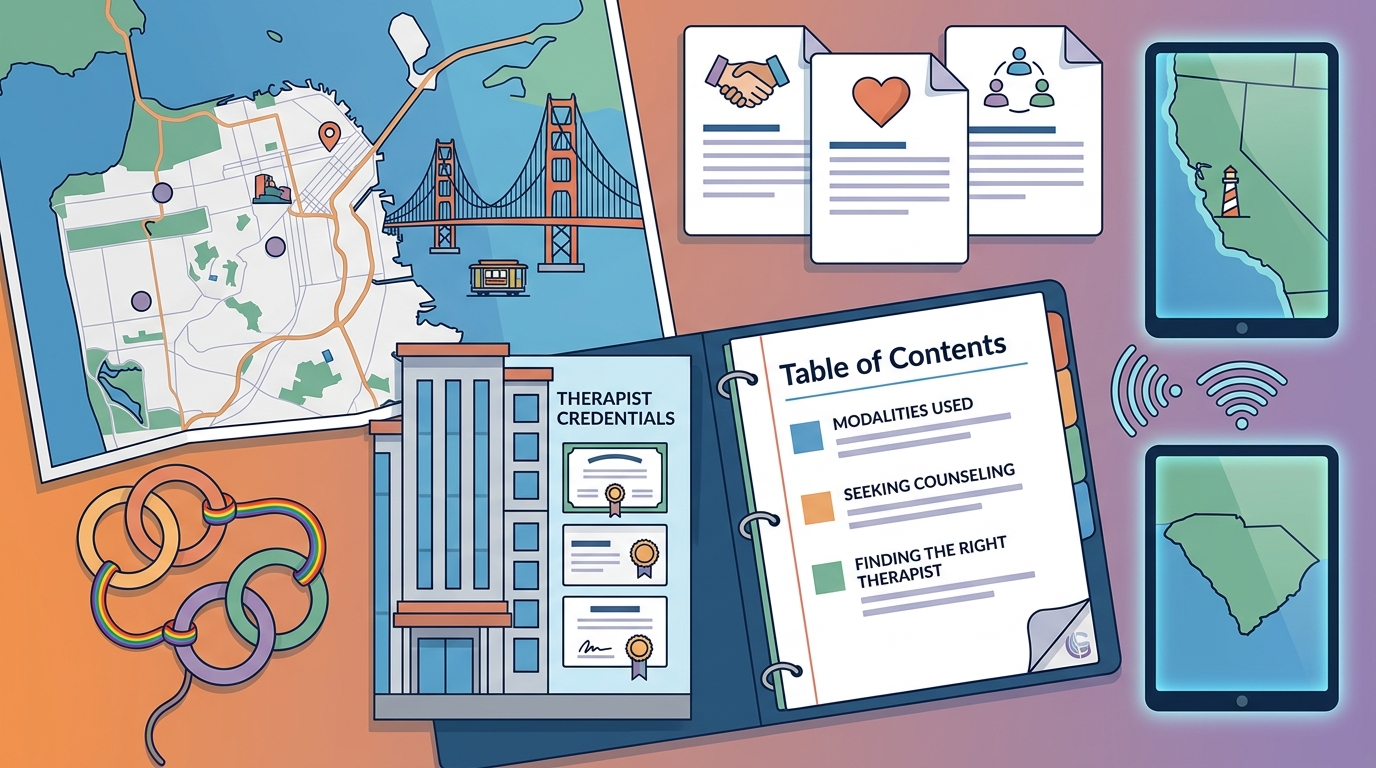
Graham Gallivan Psychotherapy operates from a private office in the Hayes Valley neighborhood of San Francisco. This location is central and accessible via public transit, serving clients from the Mission District, Castro, and surrounding Bay Area communities. The practice emphasizes a collaborative approach, where the therapist acts as a guide rather than an authority figure. This dynamic is crucial for couples who may feel stuck in power struggles or communication breakdowns.
For those who cannot travel to San Francisco, the practice offers virtual sessions throughout California and South Carolina. This flexibility ensures that geographic distance does not prevent couples from accessing specialized care. Whether in-person or online, the focus remains on creating a safe space for both partners to express their needs without fear of judgment.
Relationship Counseling Centers
Relationship counseling centers are often large, multi-provider clinics that offer a wide range of mental health services. While these centers provide convenience, they may lack the specialized focus required for deep relational work. A specialized relationship counseling center is a facility or practice where the primary mission is to support couples in navigating intimacy, conflict, and life transitions.
In the San Francisco Bay Area, the landscape includes both large clinics and independent private practices. Independent practices, such as Graham Gallivan Psychotherapy, often allow for more personalized care and longer-term continuity. Clients in these settings can build a deeper therapeutic alliance, which is a strong predictor of successful outcomes in couples therapy.
When evaluating a center or practice, consider the therapist's availability and their specific niche. Some centers focus on premarital counseling, while others specialize in post-divorce adjustment or non-traditional relationship structures. It is essential to find a provider whose expertise aligns with your specific relationship dynamics.
Couples Therapy Specialists
A couples therapy specialist is a mental health professional who has received advanced training in treating relationship distress. Unlike generalist therapists who may see a few couples a month, specialists dedicate a significant portion of their practice to dyadic work. This focus allows them to develop nuanced skills in de-escalating conflict and facilitating emotional connection.
Graham Gallivan is a Licensed Marriage and Family Therapist (LMFT) who specializes in working with couples, including those in non-traditional relationship structures like polyamory and consensual non-monogamy. This specialization is vital for many clients in San Francisco, where diverse relationship models are common. A specialist in this area understands the unique challenges of managing multiple partnerships, such as jealousy, time management, and boundary setting.
Specialists also bring lived experience and cultural competence to their work. Graham Gallivan, as a member of the LGBTQ+ community, offers an affirming perspective that resonates with many queer clients. This combination of professional expertise and personal understanding creates a therapeutic environment where clients feel truly seen and understood.
Emotionally Focused Therapy (EFT)
Emotionally Focused Therapy (EFT) is a structured, evidence-based approach to couples therapy that focuses on attachment needs and emotional bonding. Developed by Dr. Sue Johnson, EFT helps couples identify and change negative interaction patterns that lead to disconnection. The core premise is that relationship distress often stems from unmet attachment needs, such as the need for safety, validation, and responsiveness.
In practice, EFT involves mapping the couple's